The Empowerment Approach
Our Approach to Behaviour at Freegrounds Infant School
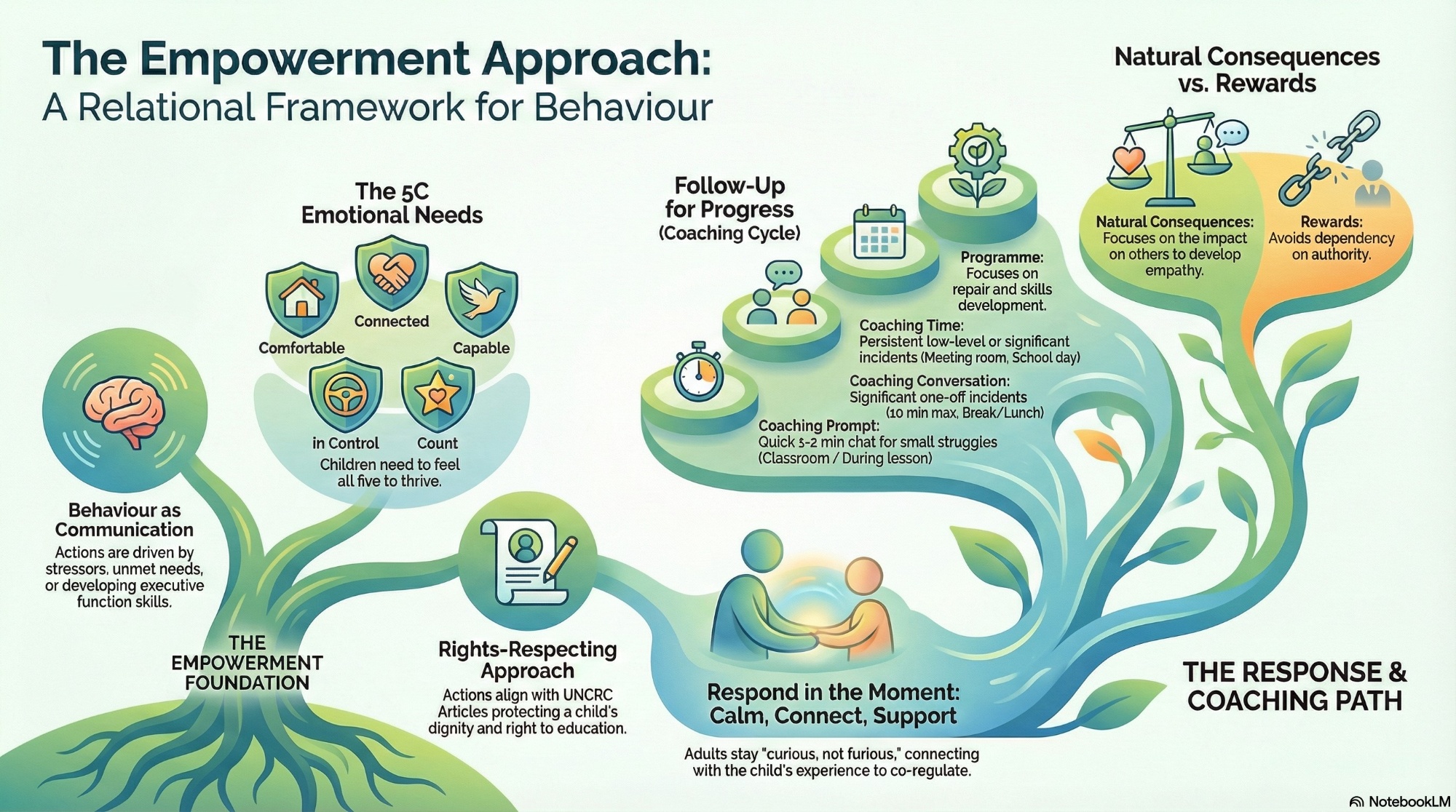
At Freegrounds Infant School, we believe that behaviour is a form of communication. Our approach is therapeutic, relational and inclusive, and is built on The Empowerment Approach—a framework that helps children understand themselves, feel safe, and develop the skills they need to learn and thrive.
A Rights-Respecting, Child-Centred Approach
As a UNICEF Rights Respecting School, children learn about their rights and how to respect the rights of others. Our behaviour approach reflects this, ensuring that every child is treated with dignity, empathy and fairness. We keep the child’s wellbeing at the centre of every decision.
What We Believe
We recognise that:
-
Behaviour often reflects stressors, unmet needs or lagging skills such as impulse control, emotional regulation or working memory.
-
Children feel and do better when adults respond with calmness, connection and curiosity, not blame.
-
Strong, kind, trusting relationships help children feel safe and ready to learn.
Our approach supports our school values: Independence, Teamwork, Thinking, Creativity, Resilience and Respect.
High Expectations, High Support
We hold high expectations for every child—but we always pair these with high levels of support. Staff work proactively to understand what a child needs, help them prepare for success, and provide scaffolds when they are struggling. Adults prioritise being “curious, not furious,” recognising the message behind a child’s behaviour.
When children cannot yet meet expectations, we put in place protective measures, adjustments and personalised support, especially for children with SEND or neurodivergent needs.
Teaching Skills, Not Administering Punishments
We teach children about:
-
how their brain works,
-
emotional regulation,
-
problem-solving skills,
-
and how to make pro-social choices.
Lessons such as Brain Best, PSHE, Trick Box and coaching sessions help children build essential executive function skills.
Recognition is focused on effort, growth and intrinsic motivation, not rewards or punishments. Celebration assemblies, value bricks, marbles and postcards home help reinforce positive behaviours in a meaningful way.
Responding When Things Go Wrong
When children struggle, adults:
-
Connect and co-regulate first — helping the child to feel safe and calm.
-
Follow up with supportive conversations to understand what happened.
-
Problem-solve together, helping the child learn new skills and repair relationships.
-
Use structured tiers of support (Coaching Prompts → Coaching Conversations → Coaching Time → Coaching Plans) if difficulties persist.
Our focus is on natural consequences—helping children understand the real impact of their actions on themselves and others, building empathy and a strong moral compass.
Partnership with Families
Children are most successful when school and families work together. We keep parents informed, involve them in behaviour support plans when needed, and value their insights. Our approach emphasises shared responsibility and a team mindset.
The Empowerment Approach
Introduction to the Empowerment Approach.
Here is the first video in our series about our new behaviour approach.
The Empowerment Approach - 2nd video
Here is our second video with more information about our new behaviour approach.