
Attendance
Good attendance is essential for children to learn well, feel secure and develop positive relationships. For our youngest children, regular attendance also helps them build routines, confidence and a strong sense of belonging within school.
We believe that children achieve best when school and families work together. Attendance is therefore everyone's responsibility, and we are committed to supporting families to help children attend school regularly and on time.
Why attendance matters
Ofsted and the Department for Education are clear that regular school attendance underpins children's achievement, wellbeing and personal development. Attendance is no longer viewed simply as a set of figures but as reflection of how well children feel supported, included and able to learn.
Missing school can mean that children:
- Miss important learning and routines
- Find it harder to settle and reconnect with friends
- Lose confidence and motivation
- Develop gaps in early skills such as reading, communication and numeracy
For infant aged children, every day really does matter.
Our approach to attendance
We aim to create a school environment that is:
- Calm, safe and welcoming
- Built on clear routines and high expectations
- Responsive to children's individual needs and circumstances
We closely monitor attendance and punctuality, looking for patterns or concerns, and we work early with families where attendance may be affected. Support is always our first approach.
How parents can help support good attendance
There is a great deal families can do to help children attend school regularly. The following strategies are particularly helpfull for younger children:
- Aim for early bedtimes during the school week
- Prepare clothes, bags and lunches the night before
- Try to keep morning routines calm and consistent
Encourage positive attitude at school
- Talk positively about school and the learning your child enjoys
- Celebrate effort, friendships and achievements, not just outcomes
- Avoid talking about worries at drop off – share these with staff separately
Support children who feel worried or anxious
- Mild worries are normal, especially after weekends and holidays
- Reassure your child and bring them to school even if they are reluctant - this often helps worries reduce
- Speak with your child's teacher or the school office if concerns persist so we can support you early
Make informed decisions about illness
- Children can usually attend school with minor illnesses, such as a runny nose or mild cold/cough
- If you are unsure whether your child is well enough for school, NHS guidance can help parents decide
- Please contact us if illness if affecting attendance so we can offer appropriate support
- Use our "under the weather" form if your child is not 100% well so we can keep an eye on them in school.
Communicate with school
- Let us know as early as possible if your child is unwell or unable to attend
- Talk to us if there are family or medical circumstances affecting attendance - we are here to help
Working together
- Seek to understand the reasons behind absence
- Work in partnership with families to remove barriers
- Offer support that is appropriate to the child's needs Involve other agencies if additional help is required
Our aim is to ensure that every child has the best possible opportunity to attend regularly, feel included and thrive at school.
Should your child not be able to come to school, then please call the school office before 9am and let us know.
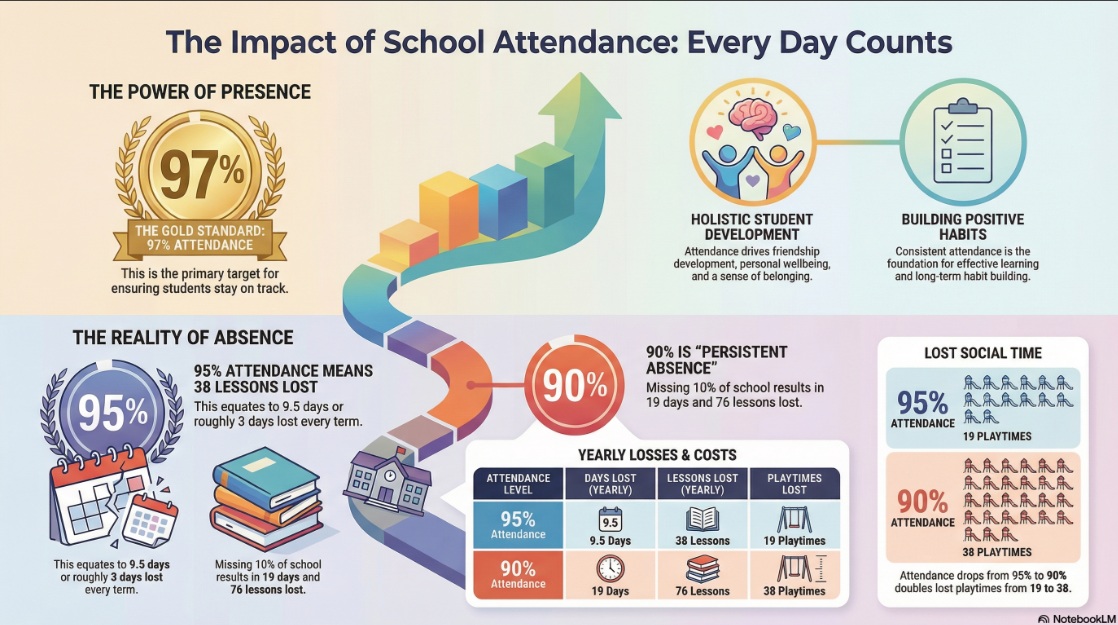
You can view our attendance policy here:
' style="width: 100%; height: 100%;">
You have not allowed cookies and this content may contain cookies.
If you would like to view this content please
' style="width: 100%; height: 100%;">
You have not allowed cookies and this content may contain cookies.
If you would like to view this content please
Children are categorised as 'persistent absentees' if their attendance falls below 90%. This threshold is inline with the County and National threshold.
Penalty notices might be issued for unauthorised periods of absence; more details can be found in this guidance: